
Aluminium Parapet Cappings: What Contractors Should Check Before Fabrication
October 26, 2026
On a busy roofing project, propane cylinders can quickly become difficult to manage. New deliveries arrive before empty bottles are collected, storage areas change as work progresses, and several trades may need access to the same part of the site.
A gas bottle cage provides a designated place to keep cylinders secure, but choosing one involves more than checking how many bottles it can hold. Contractors also need to consider where the cage will be positioned, how cylinders will be handled and whether the storage arrangement will remain practical throughout the project.
We manufacture gas bottle cages for roofing contractors, including steel cages designed to accommodate up to six 37 kg or 47 kg propane cylinders. Here are the main considerations when choosing a cage for a construction site.
Choose a Cage That Suits the Cylinders Being Used
The first step is to establish how many cylinders need to be stored and what sizes are being used.
On roofing projects involving torch applied systems, the number of propane cylinders on site can vary throughout the job. There may be several in use, replacements waiting in storage and empty bottles ready for collection.
A cage should have sufficient capacity for the maximum number of cylinders expected in storage, rather than just those needed for a typical day’s work.
Our cages are available in different sizes and configurations, including options for up to six 37 kg or 47 kg propane cylinders.
Full and empty bottles also need to be identified and managed appropriately. Even an empty cylinder may contain residual gas and should be treated with care.
If other gases, such as oxygen or acetylene, are used on the project, their storage requirements must be assessed separately. Different gases may require segregation and should not automatically be stored together.
Find a Suitable Storage Location
A secure cage is only effective if it is positioned in a suitable location. On construction sites, that means considering the surrounding conditions as carefully as the cage itself.
LPG cylinders should generally be stored outdoors in a secure, well ventilated area, away from ignition sources and combustible materials. The ground must also be suitable for supporting the cage and its contents.
Before deciding where the cage will sit, contractors should check:
- Ventilation: Choose an open, well ventilated area where escaping gas cannot easily accumulate. LPG vapour is heavier than air and can collect in drains or other low lying spaces.
- Ground conditions: The surface should be level, stable, well drained and non combustible.
- Nearby hazards: Allow appropriate separation from ignition sources, combustible materials, building openings and other potential hazards.
- Vehicle movements: Consider delivery vehicles, site plant and the risk of accidental impact.
- Access routes: Make sure the cage does not obstruct walkways, emergency exits or routes needed by other contractors.
- Working space: Leave enough room for the doors to open fully and for cylinders to be removed without unnecessary handling.
The location should be included in the site’s storage risk assessment. Depending on the quantity of LPG being stored, additional requirements under Irish storage regulations may also apply.
It is worth reviewing the arrangement as construction progresses. An area that works during the early stages may become unsuitable once scaffolding changes, deliveries increase or other trades move nearby.
Keep Cylinders Secure and Accessible
Roofing teams need to retrieve and return cylinders safely throughout the working day. A cage that is difficult to access can create unnecessary handling problems, particularly when several bottles are stored together.
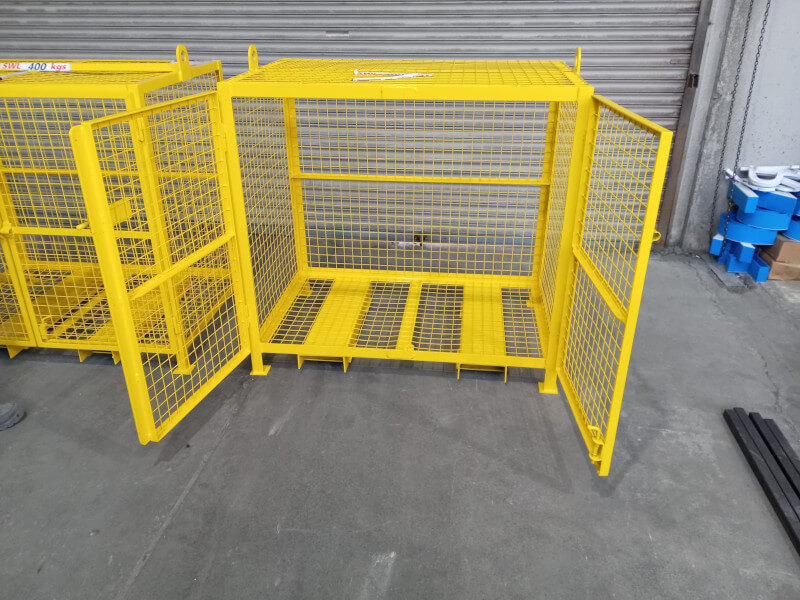
Our steel gas bottle cages feature full height hinged doors that open 180 degrees, making it easier to access the storage area. They also include a padlock facility and gas storage warning signage.
Cylinders should be kept upright and suitably restrained to prevent them from falling or moving unexpectedly. Access must be restricted to authorised personnel, with the doors secured when the cage is not in use.
Good organisation helps here too. Keeping the storage area clear and ensuring cylinders are returned to their designated positions makes everyday work more straightforward.
Consider How Cylinders Will Be Moved Around the Site
Getting cylinders into storage is only one part of the job. Contractors also need to consider how they will be transported between the cage and the working area.
A 47 kg propane cylinder weighs considerably more than 47 kg when full, as the stated capacity refers to the gas content rather than the combined weight of the cylinder and its contents.
Moving heavy cylinders across uneven ground, temporary access routes or between different working levels requires suitable equipment and planning.
The Construction Industry Federation recommends using a purpose built cylinder trolley with a chain restraint during transfers. Cylinders should not be rolled on their sides or lifted by the valve or protective shroud.
The route between the storage area and the point of use should therefore be considered before positioning the cage. Where cylinders need to be moved to roof level, appropriate lifting arrangements must be established by competent personnel.
Check the Lifting Arrangements if the Cage Needs to Be Moved
On some projects, the cage can remain in one location until the roofing work is complete. On larger developments, it may need to be repositioned as different sections of the site become accessible.
Our gas bottle cages are manufactured with lifting eyes and pallet feet to assist with suitable handling and positioning arrangements.
We also supply a 12 month GA1 certificate, with electronic access to the relevant documentation for site records.
However, GA1 documentation records an examination and does not automatically authorise every proposed lifting operation.
Before moving a cage, the site team must confirm its safe working load, the permitted lifting configuration and whether it is approved to be lifted with cylinders inside. The proposed operation must also be planned using suitable lifting equipment and procedures.
Discussing these requirements before ordering helps ensure that the selected cage is appropriate for its intended use.
Look for Construction That Can Withstand Site Conditions
A gas bottle cage used on roofing projects may be exposed to rain, regular handling and repeated movement between sites. Its construction and finish should be suitable for these conditions.
We manufacture our cages using heavy duty steel box and angle sections, providing a solid framework for construction environments.
Each cage receives an industrial quality powder coated finish, available in standard RAL colours. This helps protect the steel surface and provides a consistent appearance.
Regular inspection is still important. Hinges, locking arrangements, lifting points and the framework should be checked for damage or deterioration, particularly after the cage has been moved.
What Should Roofing Contractors Confirm Before Ordering?
Once the storage and handling requirements are established, providing the right information makes it easier for us to prepare a quotation.
The main details to confirm include:
- Cylinder types and sizes: Specify whether the cage is intended for 37 kg or 47 kg propane cylinders, or another cylinder type.
- Storage capacity: Confirm the maximum number of cylinders that need to be accommodated.
- Preferred configuration: Identify whether a secure cage, floor stand, wall rack or storage pallet is required.
- Site restrictions: Provide any dimensions or access limitations that could affect the cage size or positioning.
- Handling requirements: Explain whether the cage will remain in a fixed location or may need to be moved during the project.
- Quantities and finish: Confirm the number of units required, preferred RAL colour and any additional specifications.
Delivery dates are also worth discussing early, particularly on larger developments where several roofing teams may be working across different buildings.
With these details agreed, we can review the requirements and provide pricing and lead times.
Gas Bottle Cages Manufactured for Roofing Contractors
We manufacture steel gas bottle cages for roofing contractors working on residential, commercial and larger construction projects across Ireland. Our range includes secure storage cages and other cylinder storage configurations, with fabrication and powder coating completed in house.
If you need gas bottle cages for an upcoming project, send us your specifications, quantities and any site requirements through our online quotation form. Our team can review your requirements and provide a quotation.